Canada Updates Student Work Rules 2026: No Co-op Work Permit Required & Easier PGWP Process

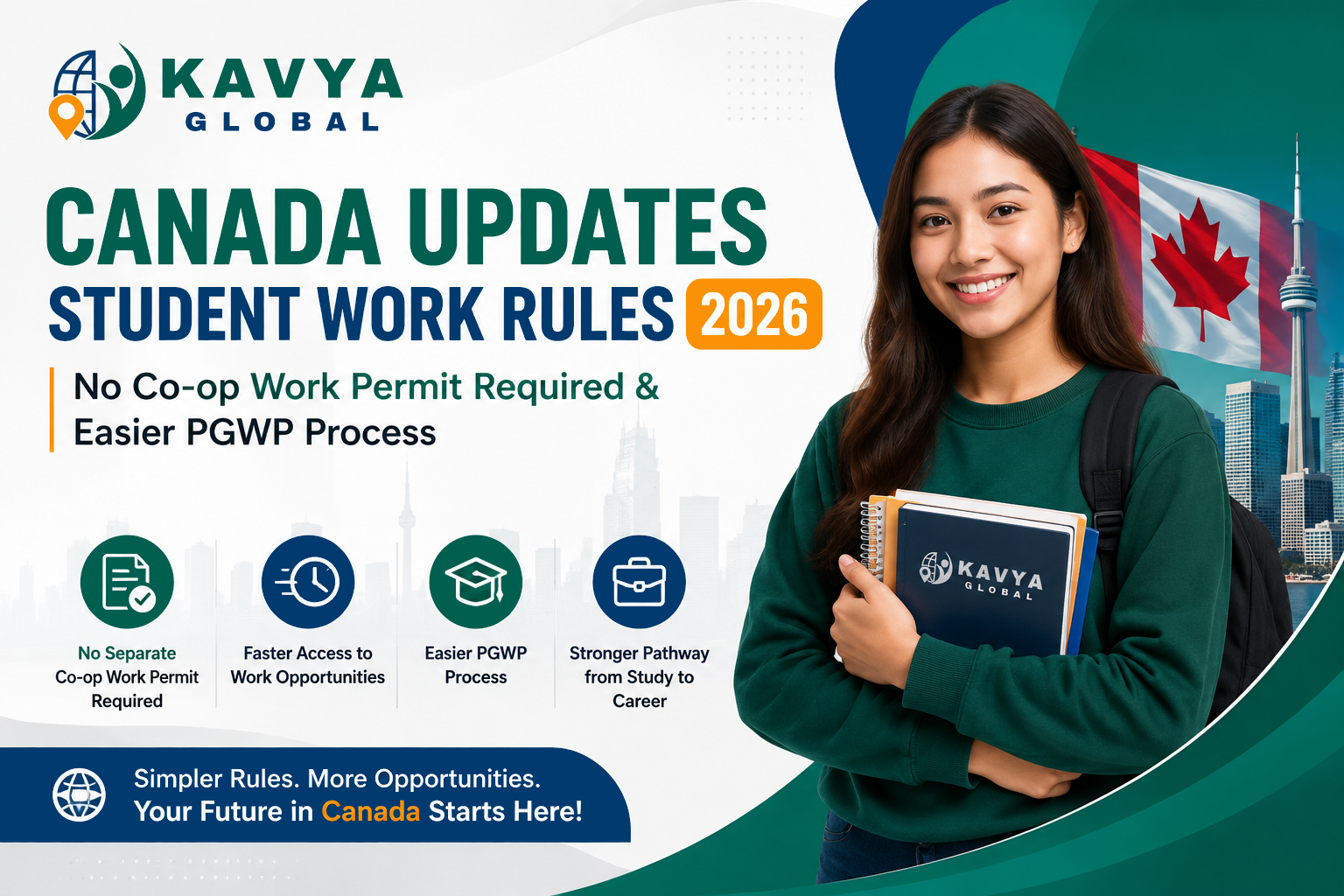
Table of Contents
What are Canada Updates Student Work Rules 2026
Canada continues to strengthen its position as one of the top study destinations for international students. In 2026, Immigration, Refugees and Citizenship Canada (IRCC) introduced major updates to student work regulations—bringing significant relief and flexibility for students pursuing co-op programs, internships, and post-graduation work opportunities.
These new rules aim to simplify processes, reduce delays, and make it easier for international students to gain valuable work experience while studying in Canada.
Key Update: No Separate Co-op Work Permit Required (Effective April 1, 2026)
One of the most important changes is that international students no longer need a separate co-op work permit for work-integrated learning components.
What does this mean?
Previously, students enrolled in programs with mandatory work placements had to apply for:
- A study permit, and
- A separate co-op work permit
Now, as of April 1, 2026:
Only a study permit is required for:
- Co-op placements
- Internships
- Practicums
- Mentorship programs
Why this change matters
This update removes unnecessary administrative barriers and delays. Students can now:
- Start their placements faster
- Avoid application processing delays
- Reduce stress and paperwork
According to immigration experts, this change will prevent students from missing valuable career opportunities due to permit delays.
Eligibility Criteria for Work-Integrated Learning (WIL)
To benefit from this new rule, students must meet all of the following conditions:
- Must have a valid study permit
- Study permit must include permission to work on campus
- Must be a full-time student at a Designated Learning Institution (DLI)
- Program must be:
- At least 6 months long
- At a post-secondary level
- Leading to a degree, diploma, or certificate
- Must have a letter from the DLI confirming that the work placement is mandatory
- Work placement must not exceed 50% of the total study program
Important: This rule only applies if the work placement is a required part of the program.
Proposed Changes to Post-Graduation Work Permit (PGWP)
In addition to co-op changes, IRCC is also working on improving the Post-Graduation Work Permit (PGWP) system.
What is being proposed?
The government is considering allowing international students to work without a permit in the following situations:
- While waiting for a study permit extension decision
- While waiting for a PGWP application decision after graduation
Current Challenge for Students
Right now, many students face a gap between:
- Completing their studies
- Receiving their PGWP approval
This creates uncertainty about:
- Whether they can legally work
- Their employment status
- Financial stability after graduation
How the New PGWP Proposal Helps
If implemented, the new rules would:
✅ Allow students to work legally during waiting periods
✅ Reduce employment gaps
✅ Improve financial security for graduates
✅ Provide a smoother transition from student to professional
Although timelines for implementation are not yet confirmed, these changes align with Canada’s broader goal of modernizing its immigration system.
Impact on International Students
Canada Updates Student Work Rules 2026, the country continues to offer a major advantage for students planning to study in Canada, especially those enrolling in programs with co-op or internship components.
Key Benefits:
With the Canada Updates Student Work Rules 2026, the country continues to offer:
- Faster access to work opportunities
- Reduced paperwork and processing time
- Less risk of missing placements
- More clarity in post-study work rights
- Improved overall student experience
Why Canada Remains a Top Choice in 2026
With the Canada Updates Student Work Rules 2026, the country continues to offer:
- High-quality education
- Work-integrated learning opportunities
- Post-study work options (PGWP)
- Clear immigration pathways
These improvements under the Canada Updates Student Work Rules 2026 make Canada even more attractive for students from countries like Nepal, India, and other international markets.
Final Thoughts
The Canada Updates Student Work Rules 2026 introduced by IRCC mark a significant step toward simplifying student immigration processes in Canada. By removing the co-op work permit requirement and proposing flexible PGWP rules, the country is making it easier for international students to study, work, and build their future.
If you are planning to study in Canada, the Canada Updates Student Work Rules 2026 make this the perfect time to explore programs that include internships and co-op opportunities—now with fewer restrictions and faster access.